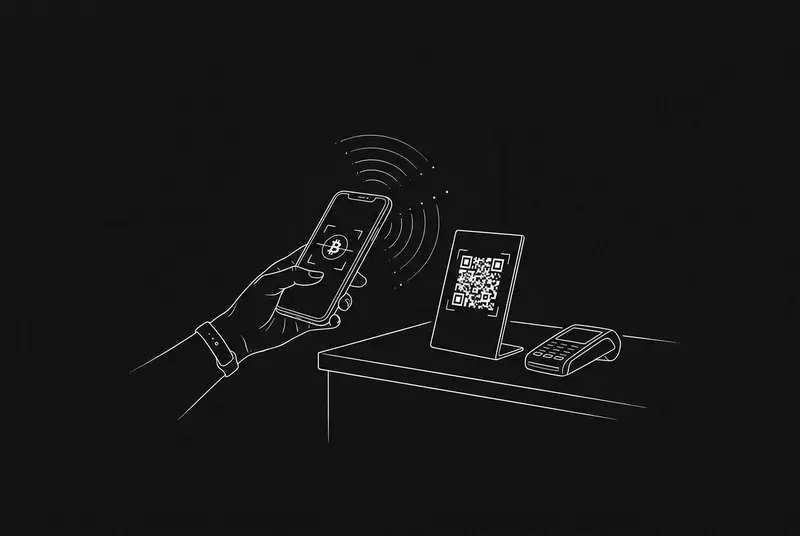
Freelancers feel every flaw of the traditional payment system at full strength: wires that cost $25 and take four days, platforms that hold funds for weeks, FX spreads that quietly take 3-5% of every international invoice — and in many countries, no access to the big platforms at all. Crypto fixes the transport layer: a client anywhere can pay you directly, and the money is yours in minutes.
This guide is the working setup — what to accept, how to invoice like a professional, and how to stay on the right side of taxes.
why freelancers moved first
Cross-border payments are where crypto is simply better today, and freelancing is cross-border by default. A designer in Karachi with a client in London, a developer in Lagos billing a US startup, a video editor in Manila working for an Australian agency — every one of those pairs loses days and percentage points to the banking system.
A stablecoin invoice ends that: the client pays USDT or USDC, you receive the exact dollar amount on-chain in minutes, and no intermediary can hold, reverse or 'review' it. [2][3] Payment platforms freezing freelancer balances is common enough to be a meme; wallet-to-wallet payments make it structurally impossible.
what to accept
| asset | why | note |
|---|---|---|
| USDT (Tron) | the global freelancer default — cents in fees, minutes to settle | confirm the client sends on Tron (TRC-20) |
| USDC (Base/Polygon) | regulated stablecoin, cheap modern chains | good for US/EU clients |
| BTC | for clients who hold it | quote at payment time |
| ETH / SOL | crypto-native clients | price moves — lock the quote |
If you only enable one thing, enable USDT — it's what international clients ask for. Show prices in your local currency (crypt.pe converts and displays PKR, INR, NGN and 25+ others) so the number always makes sense to you.
invoice like a business, not a chat message
Pasting a raw address into WhatsApp works exactly once, then becomes chaos: wrong networks, wrong amounts, 'did you get it?' messages, zero records. A proper flow costs nothing and looks professional:
- a payment page at a memorable link (crypt.pe/you) with your name, photo and accepted coins
- per-invoice requests with the amount locked — the client can't underpay or 'round down'
- automatic detection + an on-chain receipt both sides can verify
- payment history and CSV export for your records
The receipt matters more than it seems: an on-chain receipt is proof of payment that doesn't depend on anyone's word, which ends the entire category of 'payment is on the way' disputes.
volatility and cashing out
Stablecoins remove the volatility question for the invoice itself — $500 of USDT is $500 next week. What you do next is up to you: keep savings in stablecoins, convert part to local currency through an exchange or P2P market you trust, or hold a portion in BTC/ETH deliberately.
Keep the two decisions separate: how you get paid (on-chain, instant, no middleman) and how you convert (local, on your schedule). Freelancers who blur them end up custodying revenue on exchanges by default — keep the receiving wallet yours.
taxes and staying clean
Crypto income is still income. In most jurisdictions you record the fair market value of the payment on the day you receive it, exactly as you would a bank transfer, and any later gain or loss when converting is a separate event. [1] Keep the on-chain receipts and a payment log (your dashboard's CSV export exists for this) and a normal accountant can handle the rest.
This guide is practical setup advice, not tax advice — rules differ by country, so confirm the specifics with a local professional.
the 10-minute setup
- 1. Install a wallet (Trust Wallet, MetaMask + Tron wallet, or SafePal covers everything).
- 2. Claim your page, paste public addresses, enable USDT + USDC + BTC.
- 3. Set your display currency so quotes show in money you think in.
- 4. Send yourself a $2 test payment.
- 5. Add the link to your proposals, email signature and profile bios.
- 6. For each project: create an invoice with the agreed amount and send that link.
references
- [1]IRS — digital assets FAQ (US tax treatment)
- [2]Tether (USDT) transparency
- [3]Circle — USDC official
primary sources last verified — details may change; confirm on the source pages.
frequently asked
How do freelancers get paid in crypto without high fees?
Use stablecoins on cheap networks — USDT on Tron or USDC on Base/Polygon cost cents to receive. With a non-custodial page like crypt.pe there is no platform percentage; the client's network fee is the only cost in the transaction.
Is crypto payment safe for freelance work?
A confirmed on-chain payment can't bounce or be charged back, which protects you better than most platforms. The flip side: send work after payment confirms, or split milestones — there's no platform arbitration in either direction.
Do I have to pay tax on crypto freelance income?
In most countries, yes — it's ordinary income valued at the day you receive it, with any later conversion gain or loss treated separately. [1] Keep on-chain receipts and confirm specifics with a local tax professional.
What if my client has never used crypto?
Send them the invoice link anyway — a good payment page shows the exact amount, a QR code and network warnings, so a first-time payer with any major exchange app or wallet can complete it in a couple of minutes.